
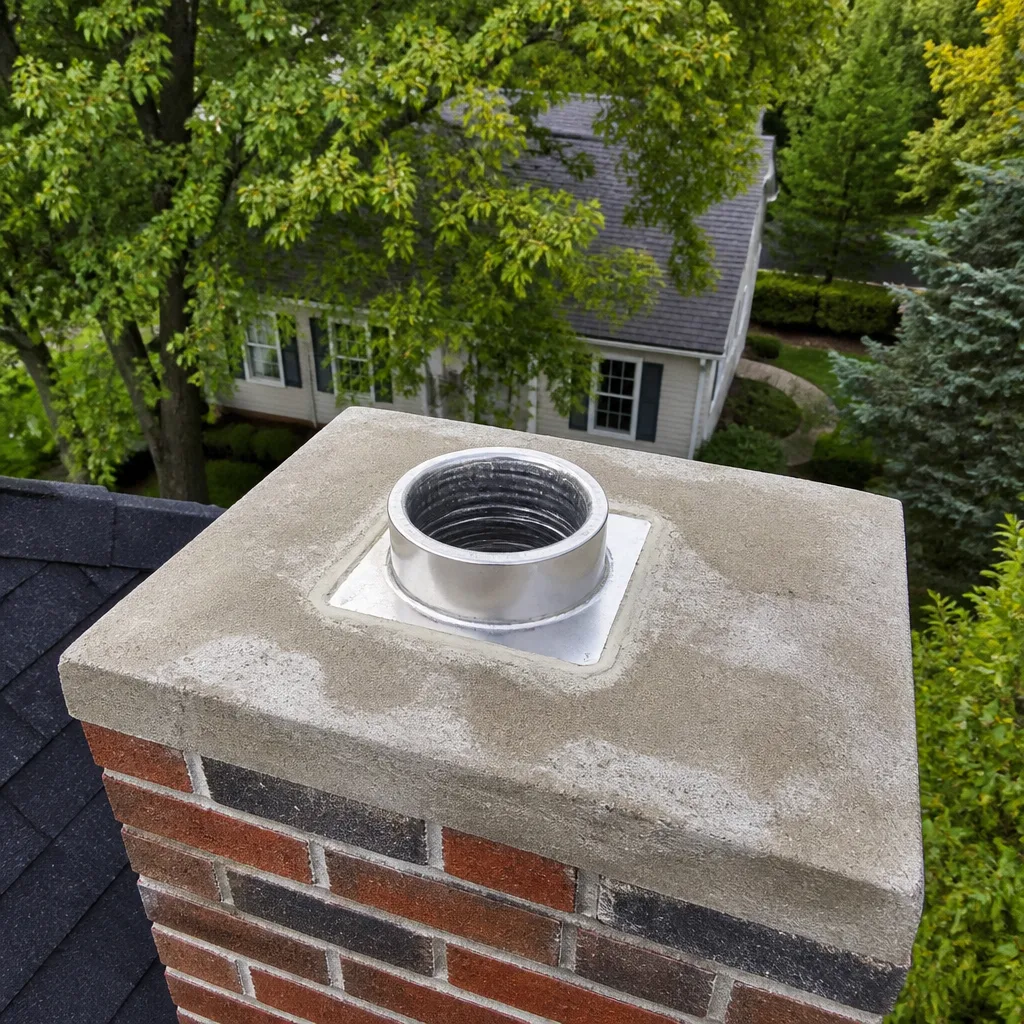
 Flue relining
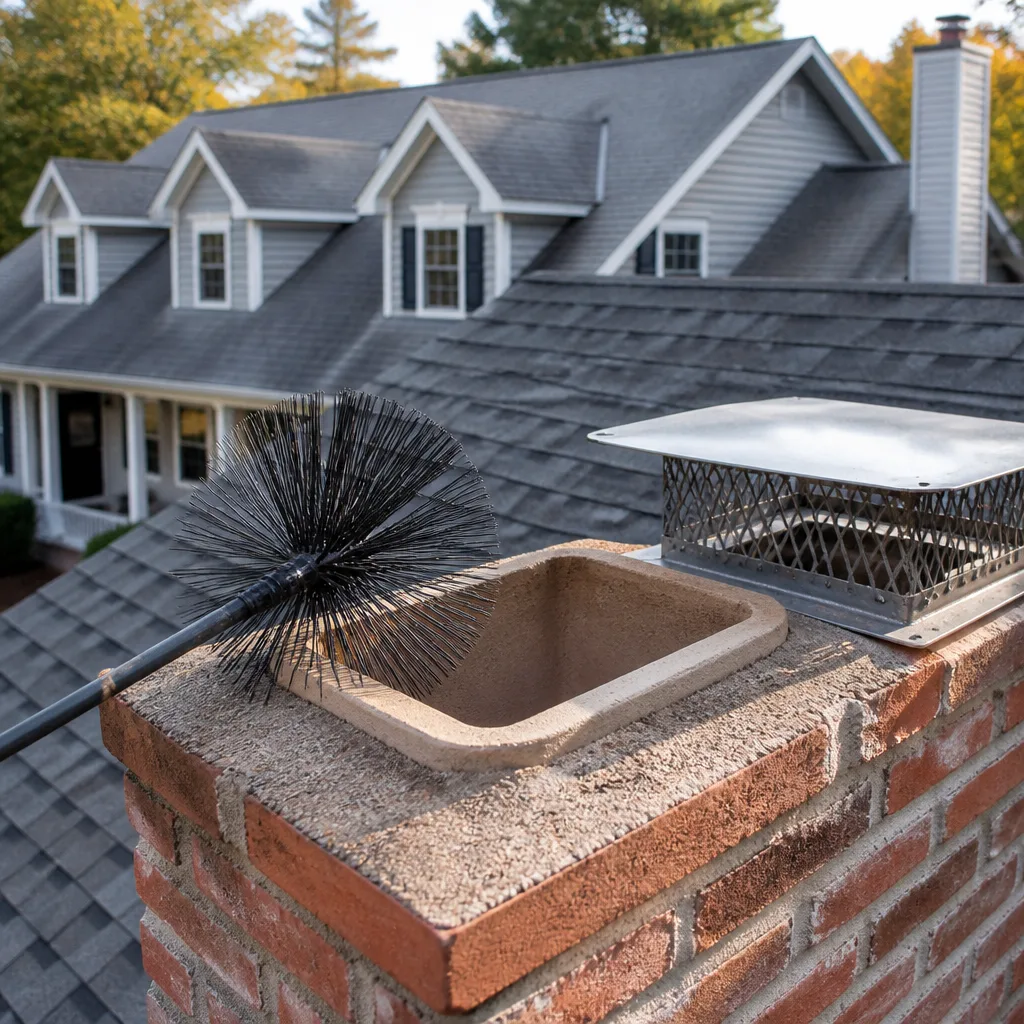 Sweep & inspection
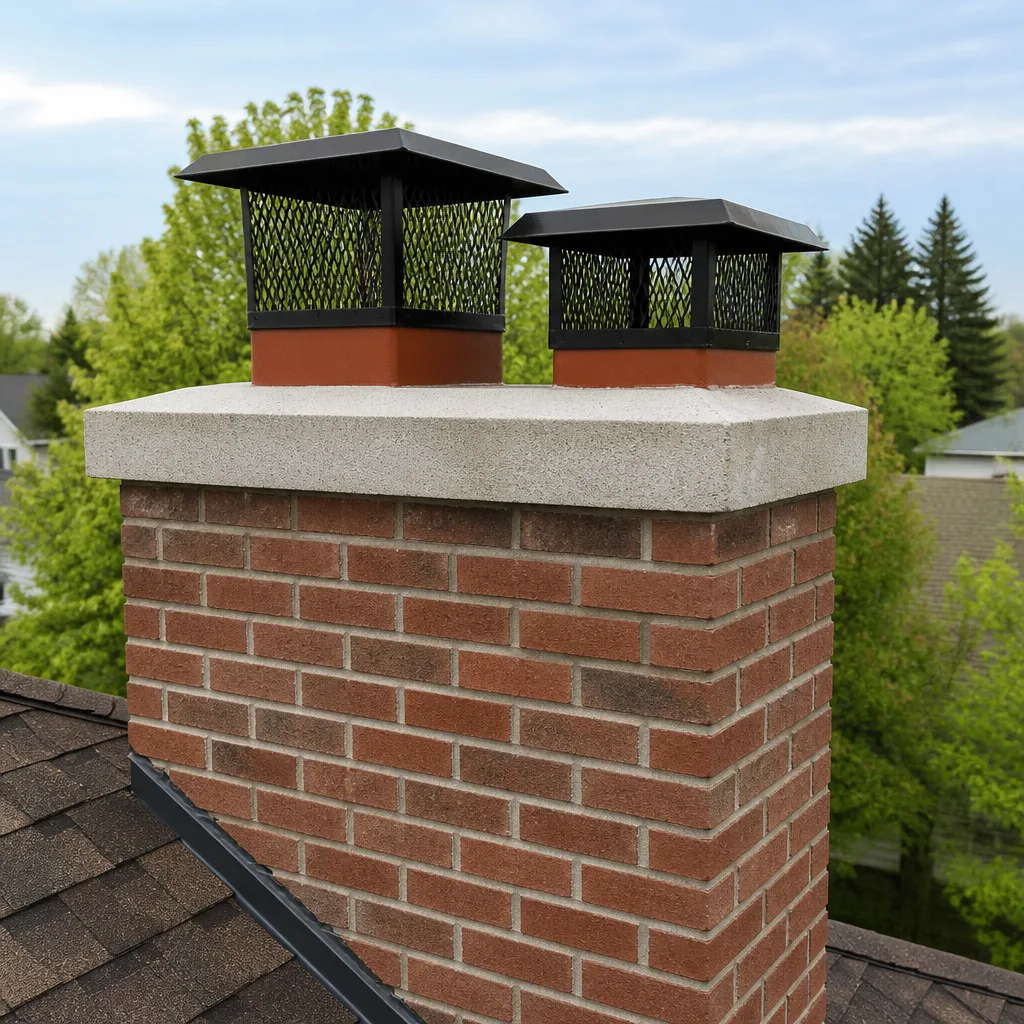 Caps & crowns
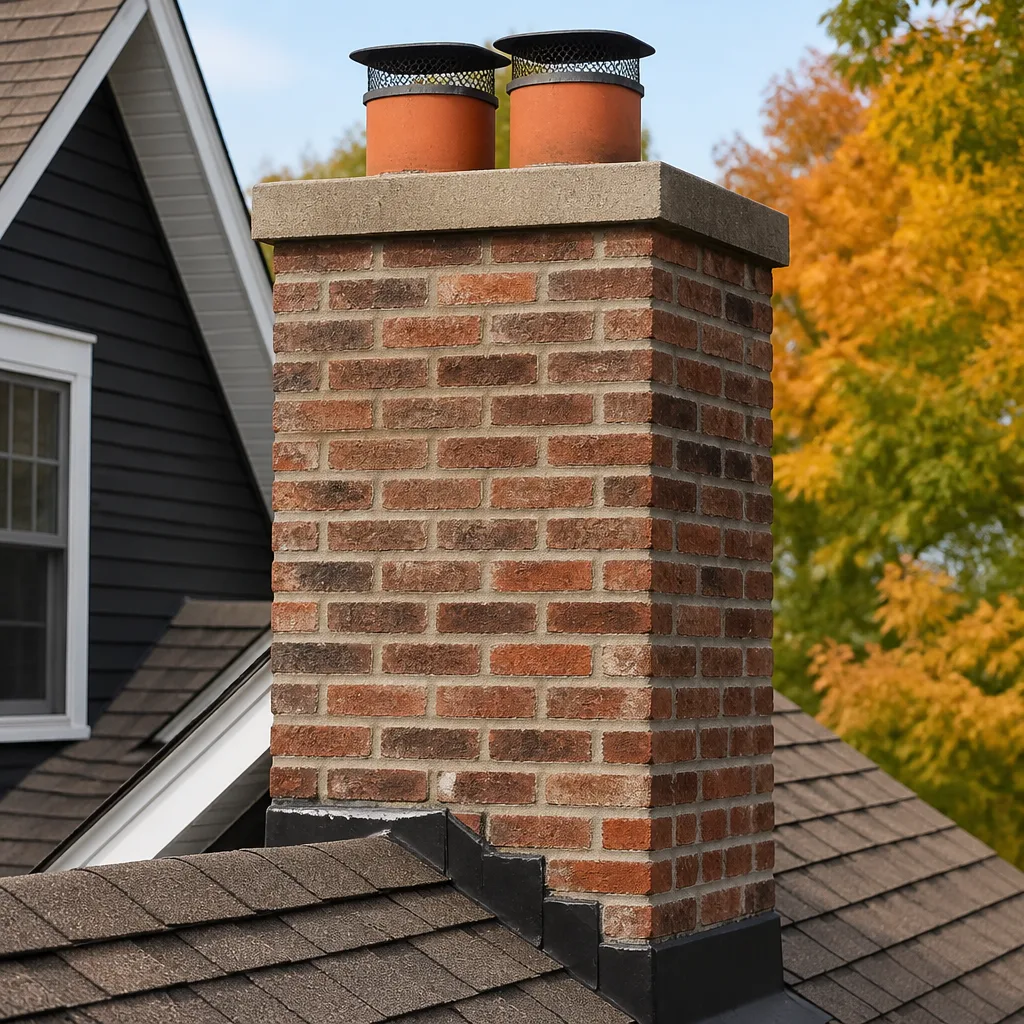 Masonry repair
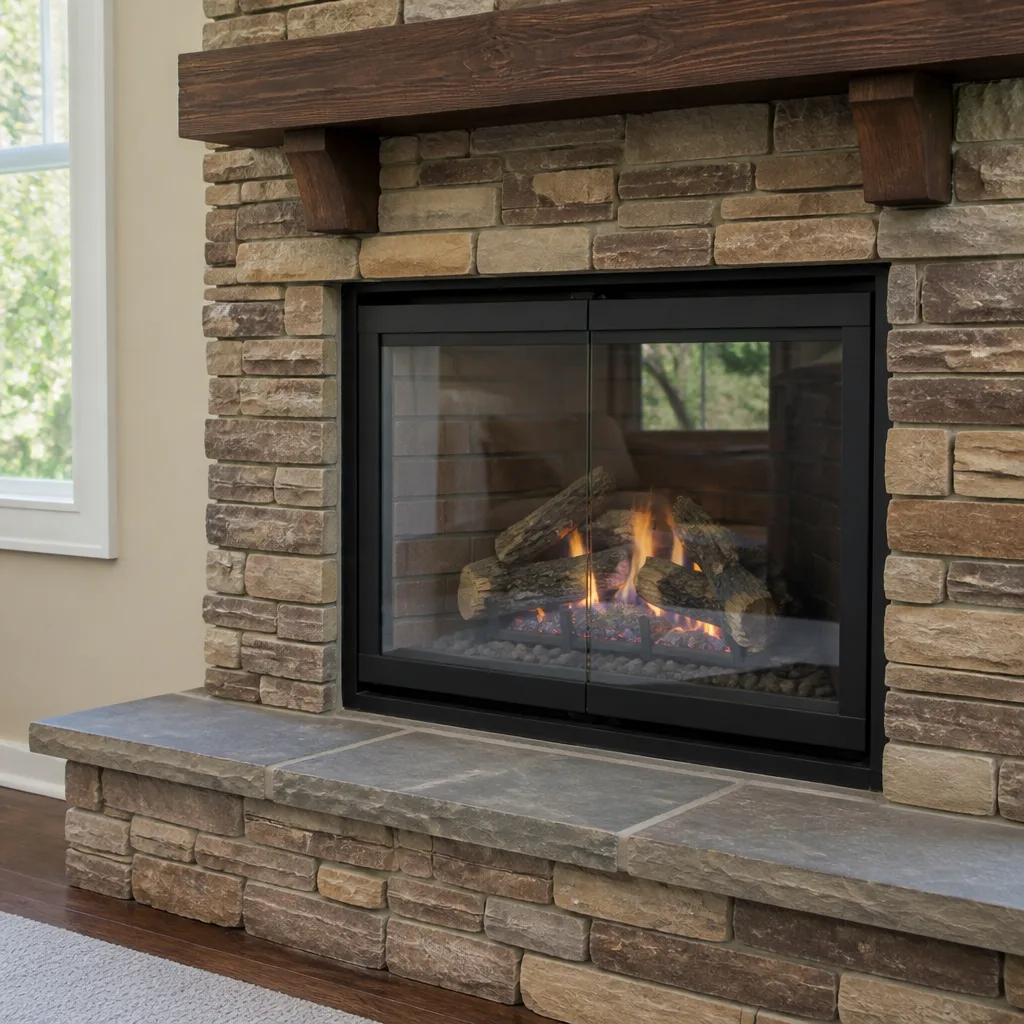 Gas fireplace service
Level 1 sweep and inspection to the NFPA 211 annual standard - flue, crown, cap, and flashing checked and photographed
Chimney sweep logs do not sweep chimneys. They loosen some creosote - which then falls where a brush and vacuum still have to collect it.
HeatShield Flue Liner Replacement: The Ventura Owner’s Guide
If you have a HeatShield flue liner that’s cracked, spalling, or starting to separate, we stock and install replacement HeatShield-compatible liner systems right here in Ventura. A typical flue liner replacement in Ventura runs $2,800 to $6,200 installed, depending on flue height, access, and whether the existing liner can be pulled clean or needs sectioned removal. Most Ventura homeowners discover the problem during a routine sweep or inspection when we run a camera up the flue, show them the footage of cracked ceramic or a bulging joint, and explain exactly what happens if the liner keeps degrading through another rainy season.
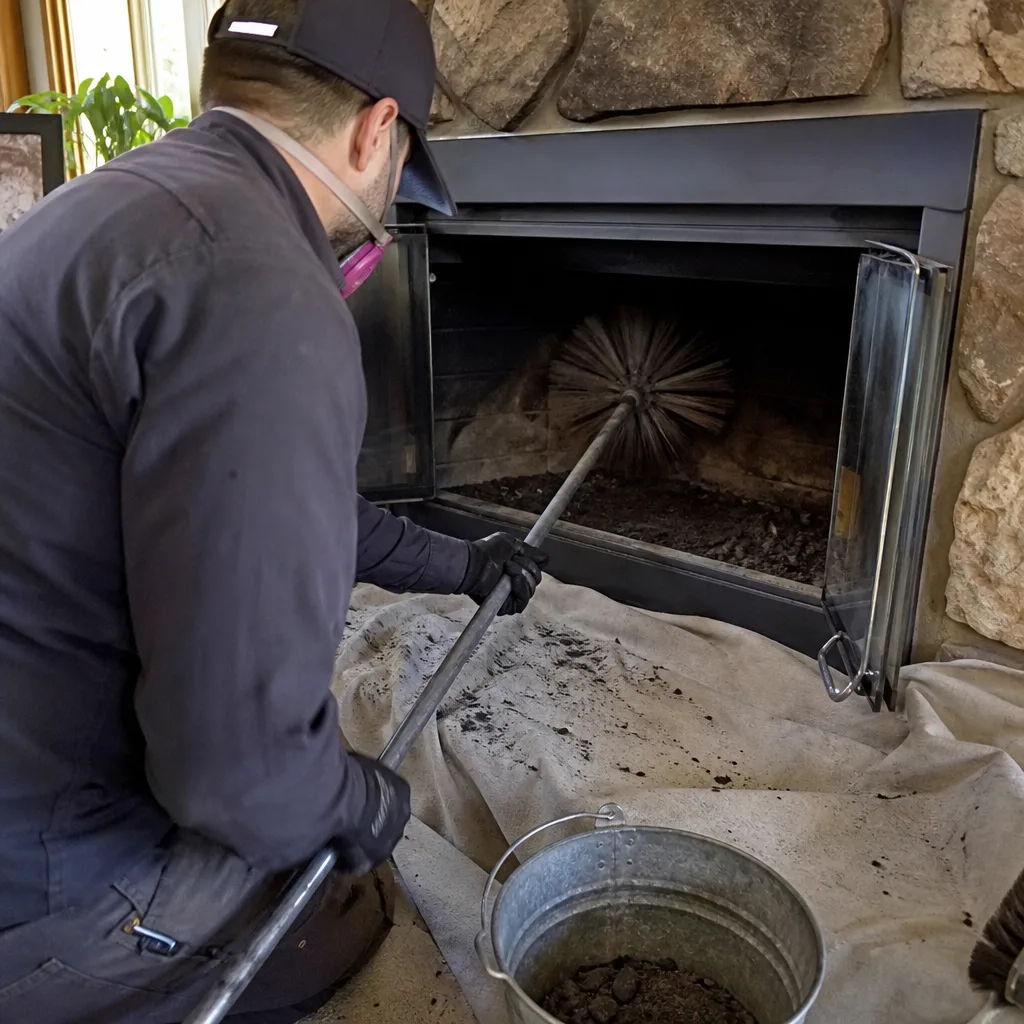
HeatShield is a resurfacing product rather than a rigid metal liner, which matters a lot when it’s failing. It’s a cerfractory (ceramic and refractory blend) coating that’s applied to the inside of an existing clay tile liner. When moisture works into the tile, freeze-thaw cycles along Ventura’s marine layer mornings, or the original application starts losing bond, that coating flakes, cracks, or pulls away from the tile. What you’re actually replacing when we talk about “replacement” is usually the liner system underneath, because once the HeatShield coating has lost adhesion, recoating over it rarely lasts.
Which HeatShield Models This Applies To
HeatShield doesn’t sell a standalone replacement “part” you’ll find on a shelf, and that’s the first thing a lot of Ventura owners trip on. HeatShield is a specialized resurfacing compound installed only by trained applicators. When it fails, the repair pathway usually means either full HeatShield reapplication after tile repair or installing a new stainless liner system. The HeatShield product line on residential chimneys typically appears either as a joint repair (HeatShield’s caulk-grade material used to seal cracked tile joints) or a full resurfacing application. If you had full resurfacing done and you’re seeing failure, you need to know whether the failure is in the coating itself or in the clay tile behind it.
Here’s the compatibility gotcha in Ventura we run into regularly: many homes in the Eastside neighborhoods near the San Buenaventura Mission have chimneys from the 1940s and 1950s with undersized clay tile liners that were never intended for modern appliance venting. HeatShield was sometimes applied over those tiles without addressing the root issue. The HeatShield coating itself doesn’t change the interior dimension of the flue meaningfully, but it cannot fix a flue that’s structurally undersized or a tile liner that’s already collapsed. Tell me what you’re seeing and I’ll tell you what it actually means.
OEM versus aftermarket doesn’t apply cleanly here, because HeatShield is applied material, not a part. What matters is what goes in when the old system comes out. We install stainless liners from DuraFlex and Gelco, which are the professional trade brands specified when a HeatShield-treated flue has reached the point where replacement beats resurfacing. Both run in 316L alloy, both come in round or oval profiles, and both match up cleanly with new top plates, caps, and connector collars.
Styles & brands we work with
Signs Your HeatShield Flue Liner Replacement Is Failing
- White or gray flakes in the firebox. This is pieces of the HeatShield cerfractory coating delaminating from the tile. It looks like sandy grit at first, then larger flakes. Same appearance we see after a chimney fire has weakened the bond between coating and tile.
- Crumbling clay tile pieces at the clean-out door. When the underlying tile has cracked, gravity brings pieces down. The HeatShield coating often masks this damage from view until the tile starts physically separating.
- Moisture staining or efflorescence on the chimney exterior. A compromised liner lets moisture pass through to the masonry. Along Ventura’s cooler mornings and ocean humidity, this reads as white mineral deposits blooming on stucco or brick, often worse on the north and west faces.
- Draft reversal or smoke spillage at first light-up. A failing liner surface increases friction and turbulence. Cold starts push smoke back into the room where a smooth flue would draw upward within seconds.
- Rust streaks or staining on the firebox walls. This says moisture has been sitting inside the flue system. It’s a red flag for liner breach because stainless doesn’t weep, but fractured ceramic over cracked tile absolutely does.
None of these five signs automatically means full replacement today. But every one of them means we should run a camera up the flue and look at what’s actually happening before recommending a plan. That’s the only way to know whether you need a masonry repair, a spot reapplication, or a full liner swap.
See the difference
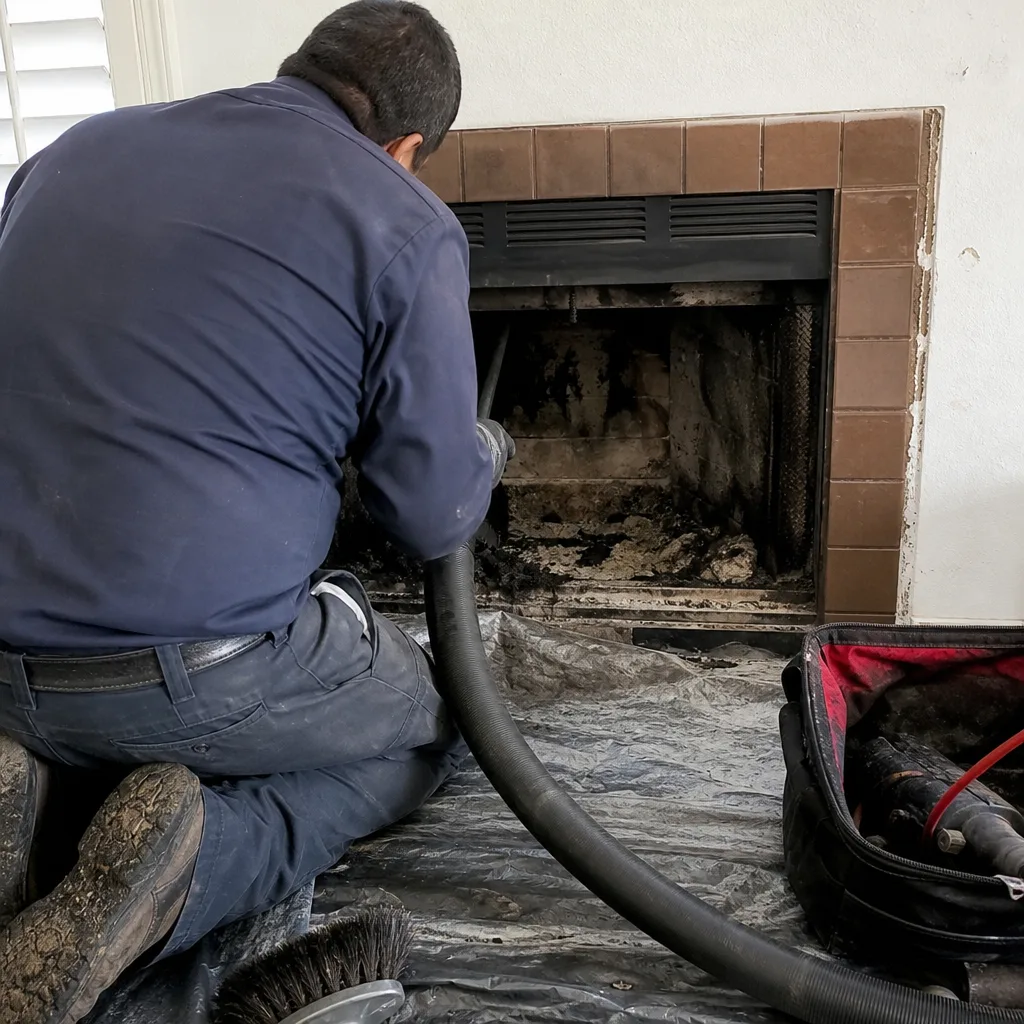 Before
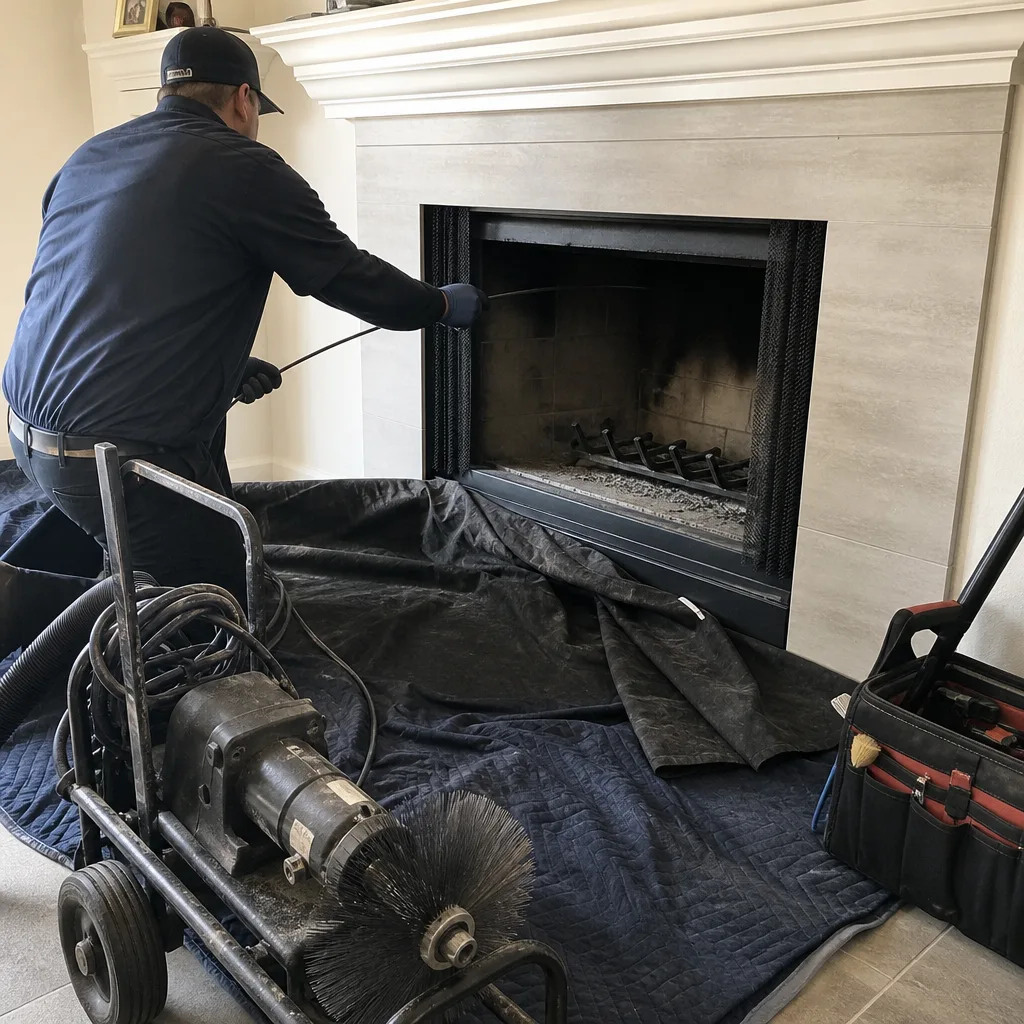 After
After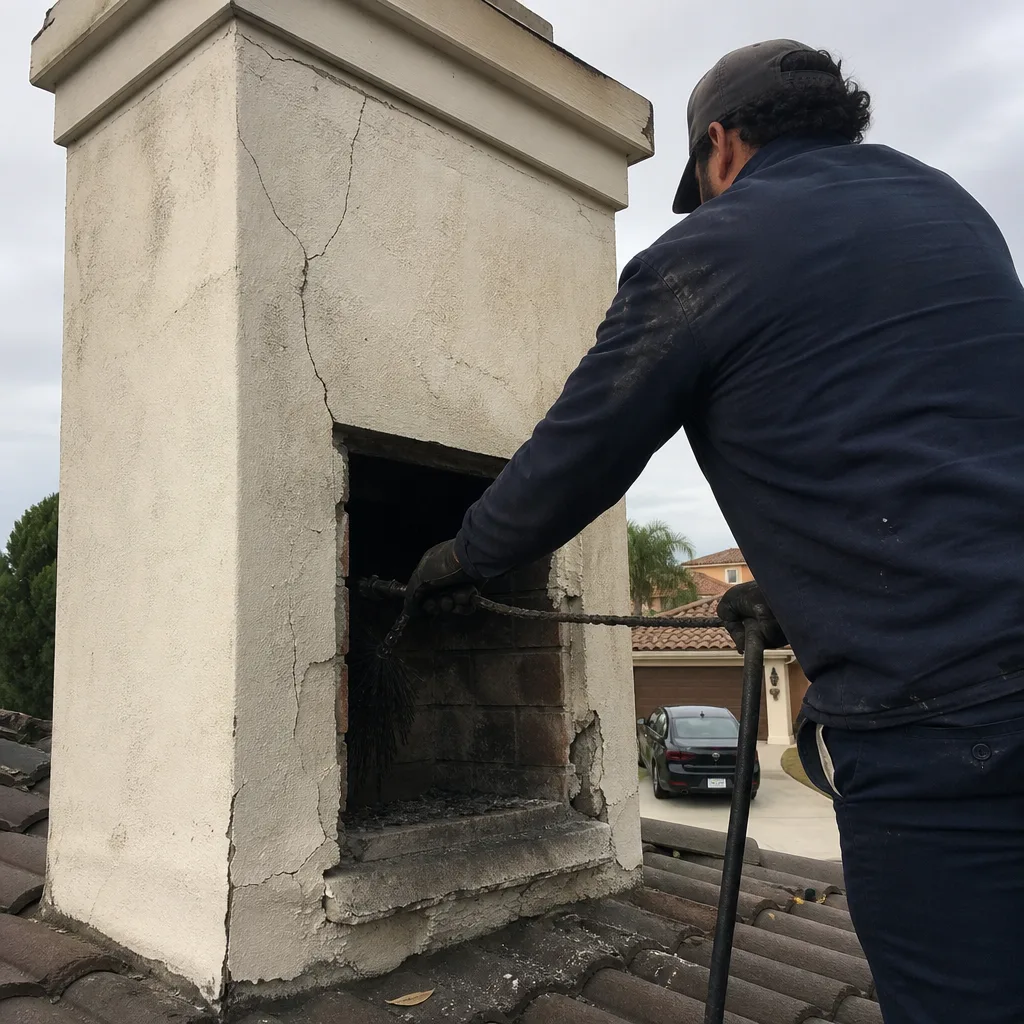 Before
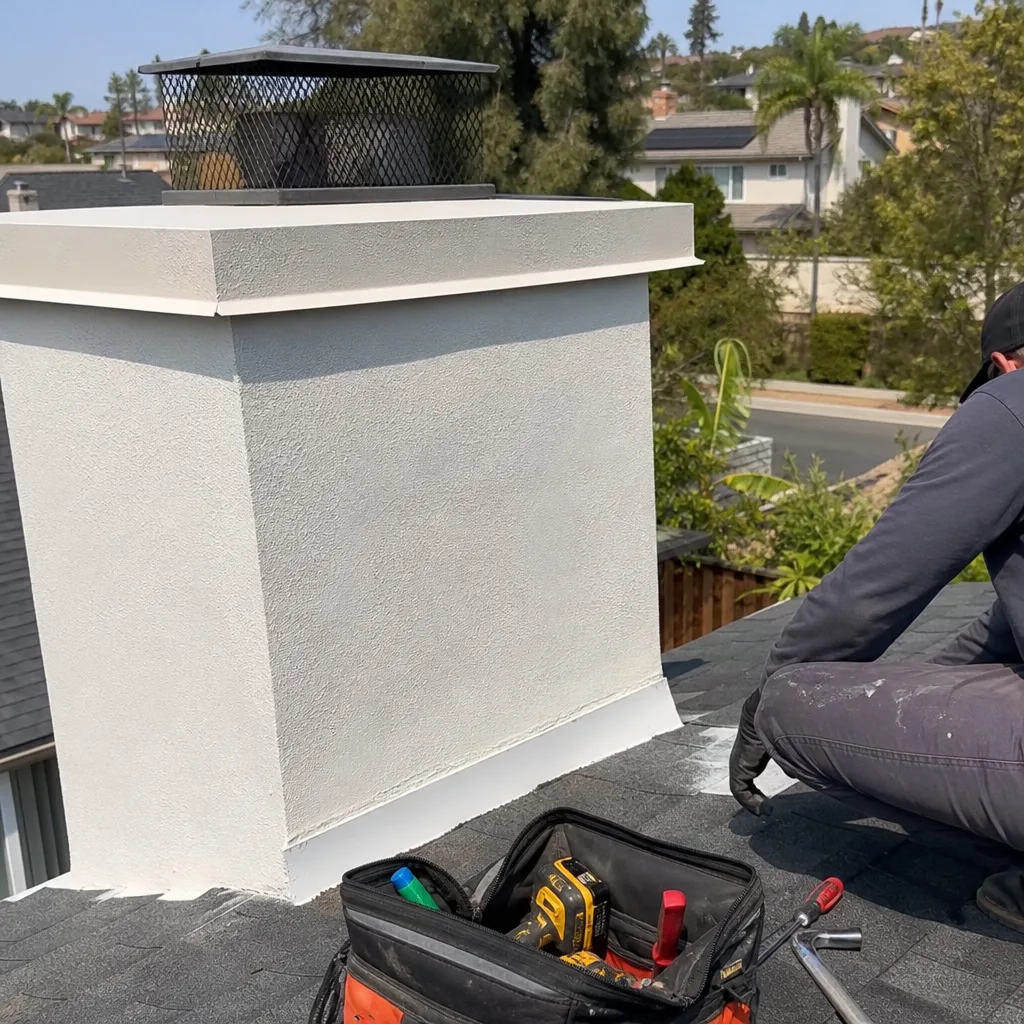 After
After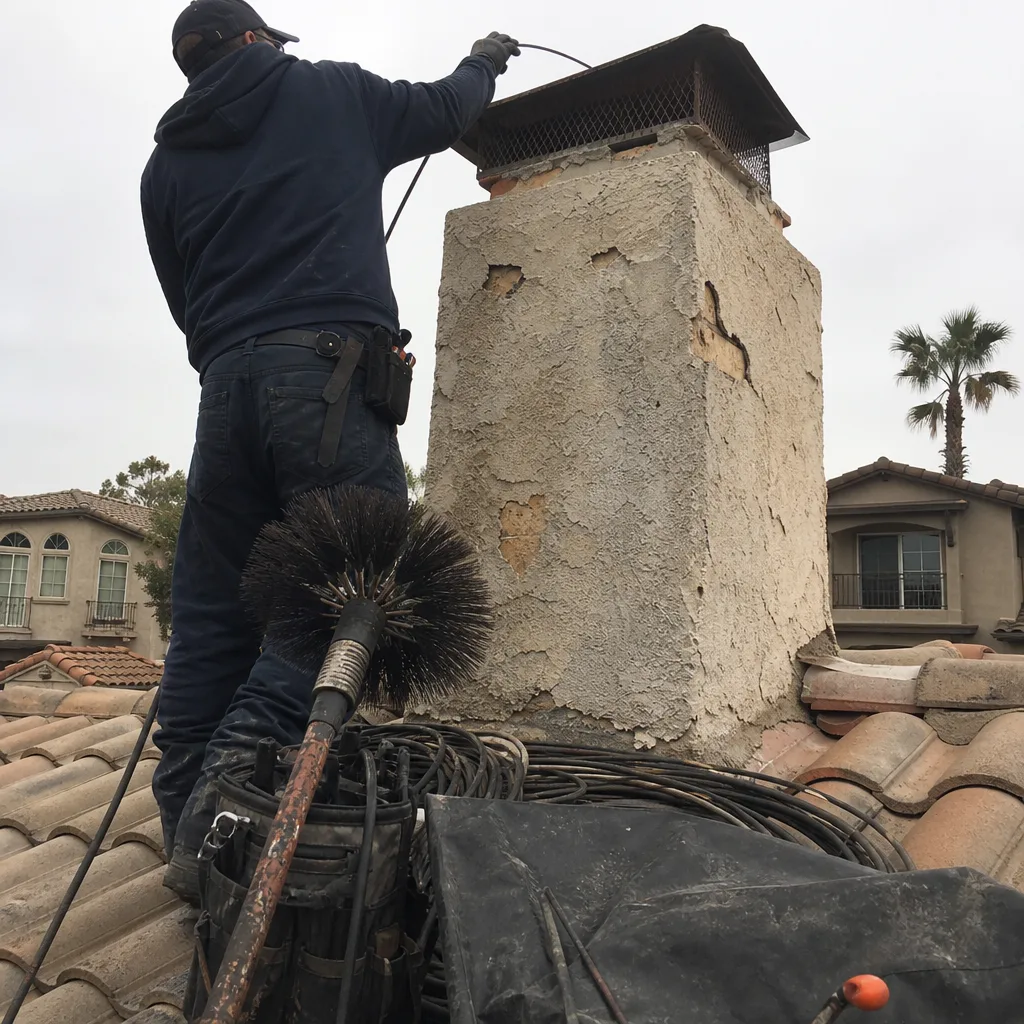 Before
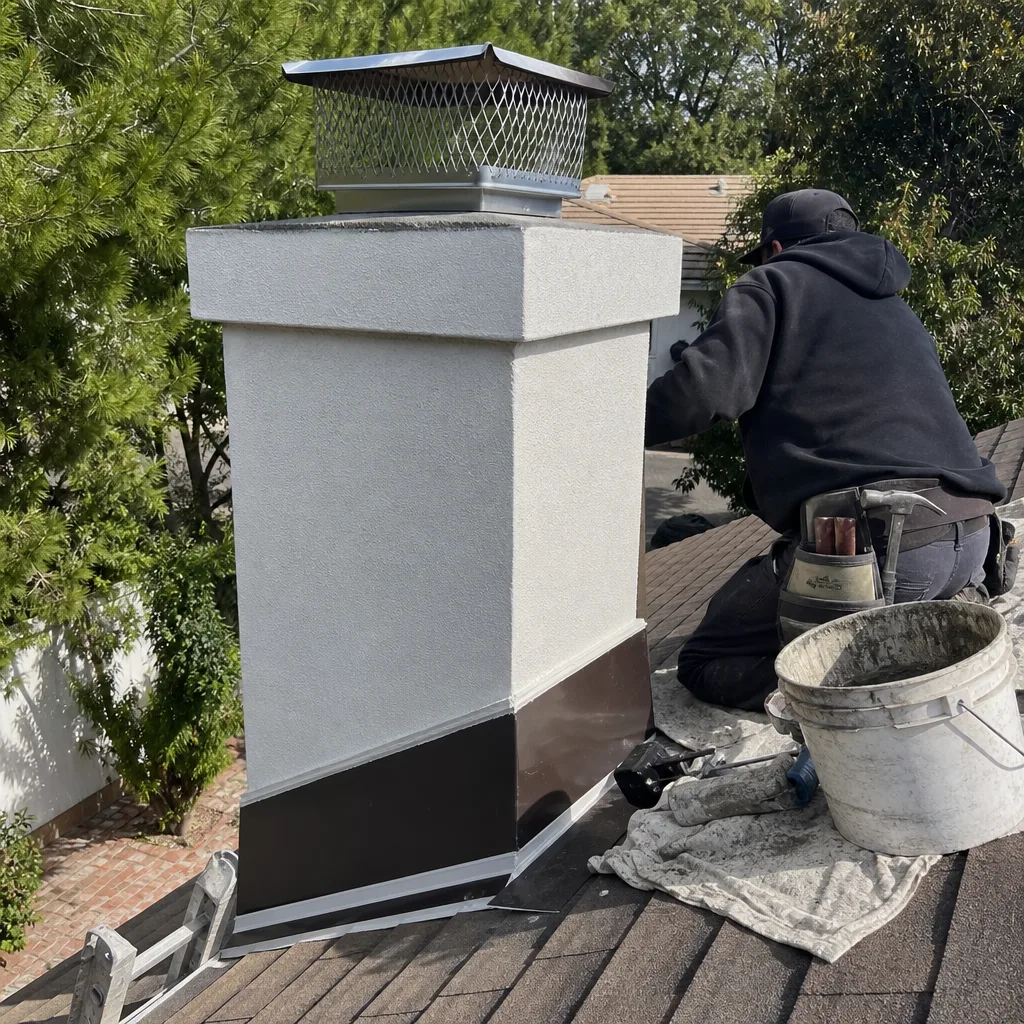 After
AfterReplacement Cost & What’s Included
In Ventura, a HeatShield-compatible flue liner replacement (meaning we install a new stainless liner system rather than trying to recoat a failing surface) typically runs:
- Single-story, straight flue with clean access: $2,800 to $3,900
- Two-story, straight flue: $3,600 to $4,800
- Flue with bends, offsets, or high-pitch roof access: $4,500 to $6,200
- Cracked tile removal that requires breakout or special tooling: Add $400 to $1,100 depending on severity
Every quote includes the stainless liner, top plate, cap, connector hardware, debris removal, a camera verification after installation, and a written report of what we found before, during, and after. The price you see on paper before we start is the price you pay, no exceptions. We never begin work without it.
Our written guarantee covers the liner installation for one full year. If anything we installed fails within that year, the second visit is free. That’s the 365-Day Done Right Promise, and it’s included on every repair we do, not sold as an add-on.
DIY or Call Us?
What you can safely check yourself: look at the firebox for flakes, use a flashlight up from the clean-out to look for debris, watch how the fire behaves during the first three minutes of a cold start. All of that is useful information to have when you call.
What you should not do is attempt to recoat, patch, epoxy, or otherwise “fix” a HeatShield liner from inside the flue. This is confined-space work on a vertical surface with a coating that requires specific surface preparation and curing conditions. At minimum you’re wasting a few hundred dollars on a bond that will fail. At worst, you’re leaving voids in the flue that allow flue gases through to combustible framing. Liner safety is not a place for a first-timer’s Youtube education. If we see flaking, cracks, or tile separation on camera, we’ll recommend a trained eye and a plan of record before anyone touches the flue. Call us at (559) 282-2695 and we’ll give you a straight answer about what you’ve got and what it actually needs.
FAQs
A properly applied HeatShield resurfacing on structurally sound clay tile can last 15 to 20 years in Ventura’s climate, but the marine layer moisture, and salt air near the ocean side of town, shortens that to 10 to 15 years when the chimney already had hairline cracking or the original application was thin. The coating performs best when the tile behind it is solid and the crown and cap are keeping water out.
Sometimes, yes. If the failure is localized to one or two cracked tile joints, HeatShield’s joint repair compound can address that without removing the entire coating. That runs materially less than full replacement. We’ll only tell you that’s an option if the camera shows the rest of the coating in sound condition.
Most single-story Ventura homes get a standard stainless liner installed in one day, typically six to eight hours on site. Homes with offsets, two-story runs, or tile breakout run into a second day. We confirm the timeline before we start, and it’s part of the written price.
We stock HeatShield’s joint repair compound and cerfractory resurfacing materials for reapplication work, and we carry DuraFlex and Gelco stainless liner components on our trucks for same-day liner replacement jobs in Ventura. For unusual flue dimensions or oval profiles we bring exact-fit components on the scheduled day rather than making it fit from whatever is rolling around the truck bin.
Written by Ruben Castellano, Owner, Alcott Chimney Ventura, serving Ventura and nearby areas since 2002. Ruben grew up in Los Angeles, trained at Los Angeles Trade-Technical College, and has spent nearly two decades learning what flues really do under heat, moisture, and time. He and his crew have worked chimneys all over Ventura, including plenty of older homes on the Eastside where the flues have seen things.