
Last updated October 15, 2026
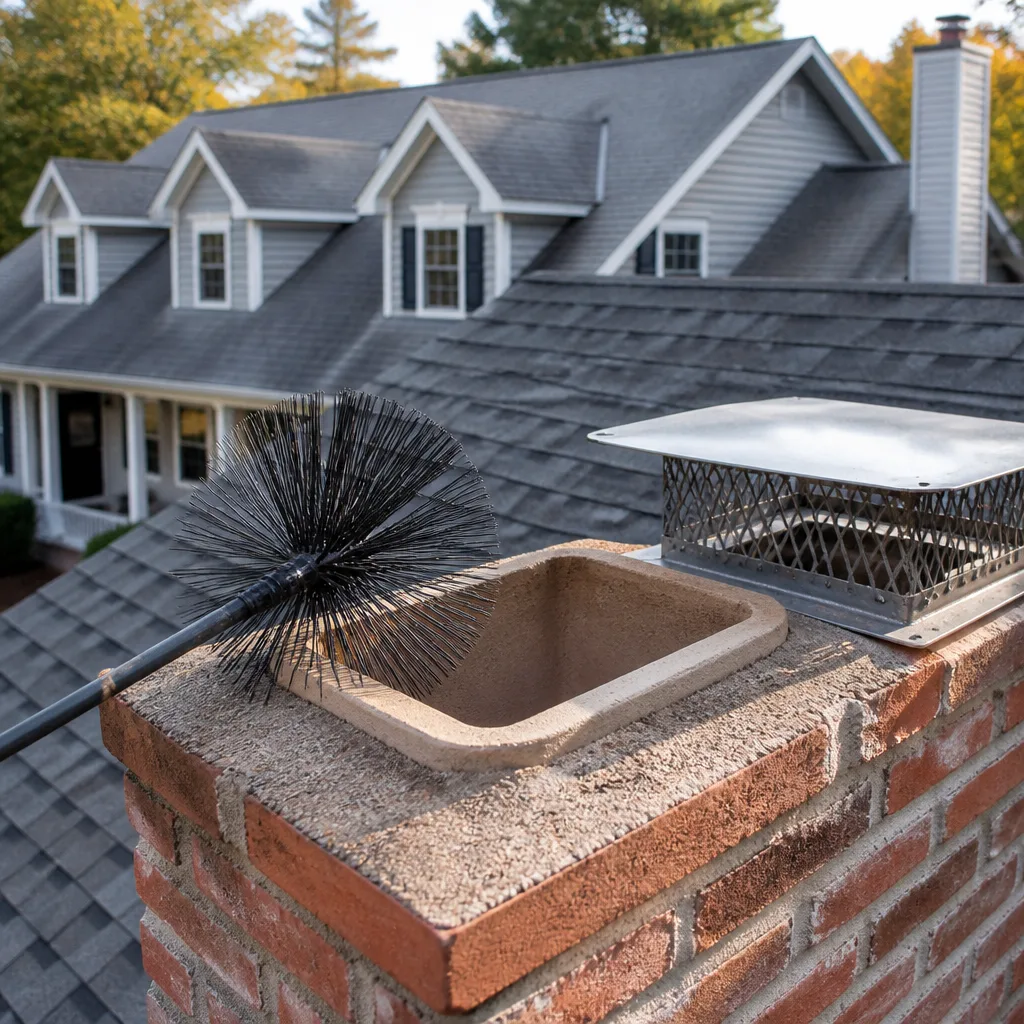 Sweep & inspection
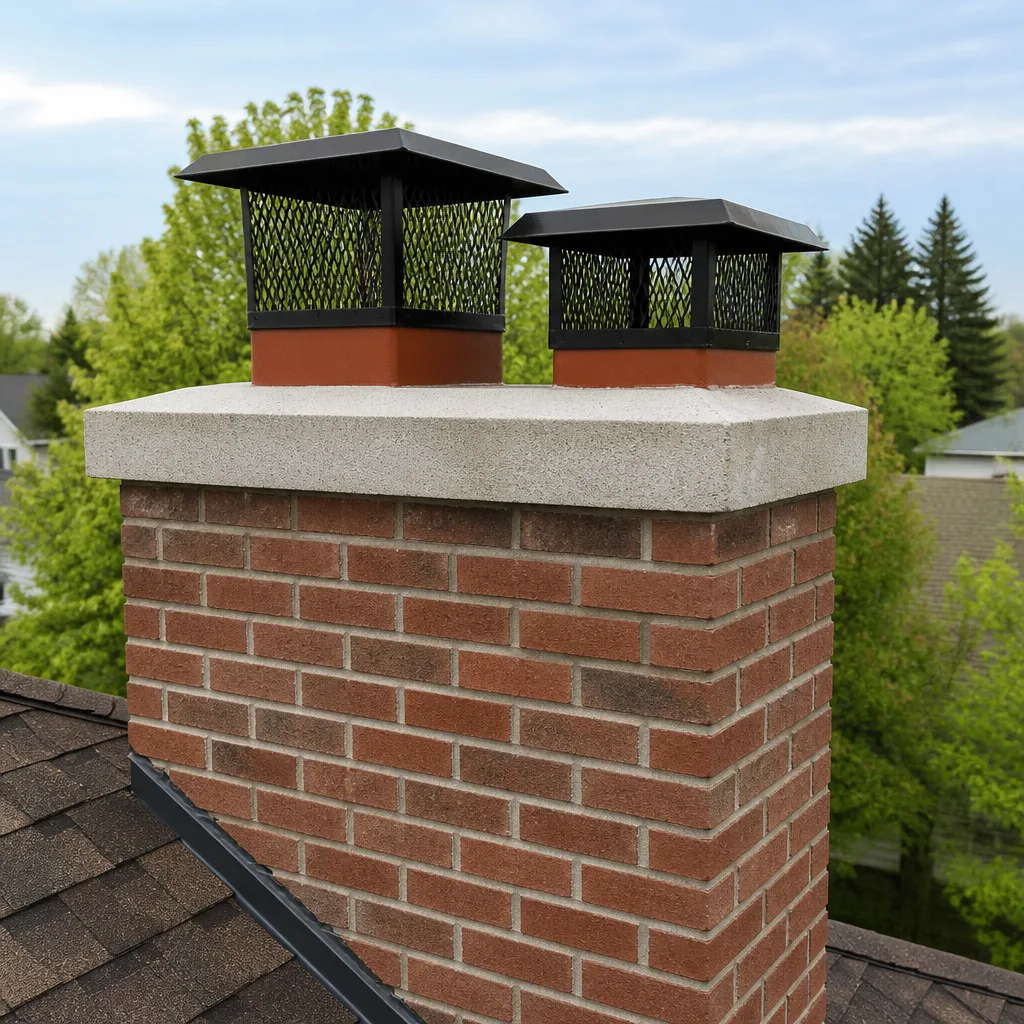 Caps & crowns
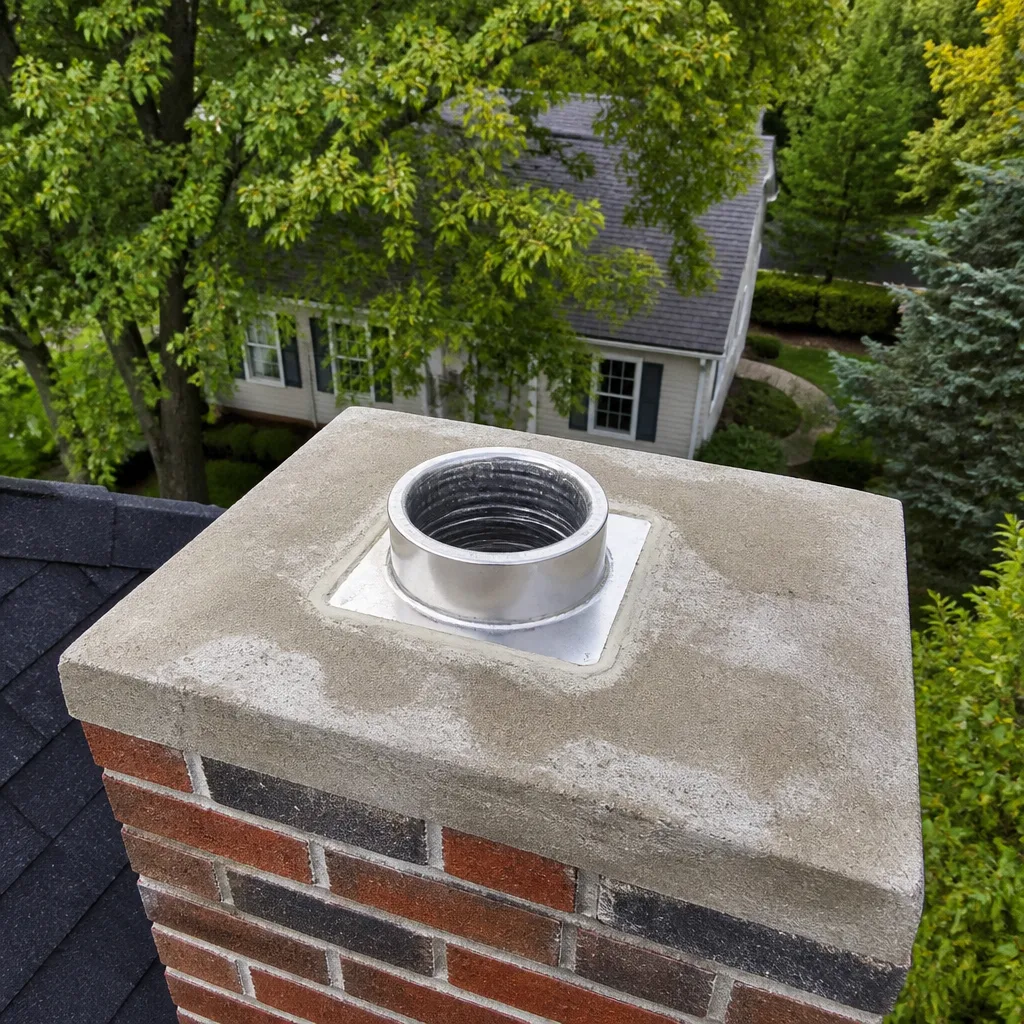 Flue relining
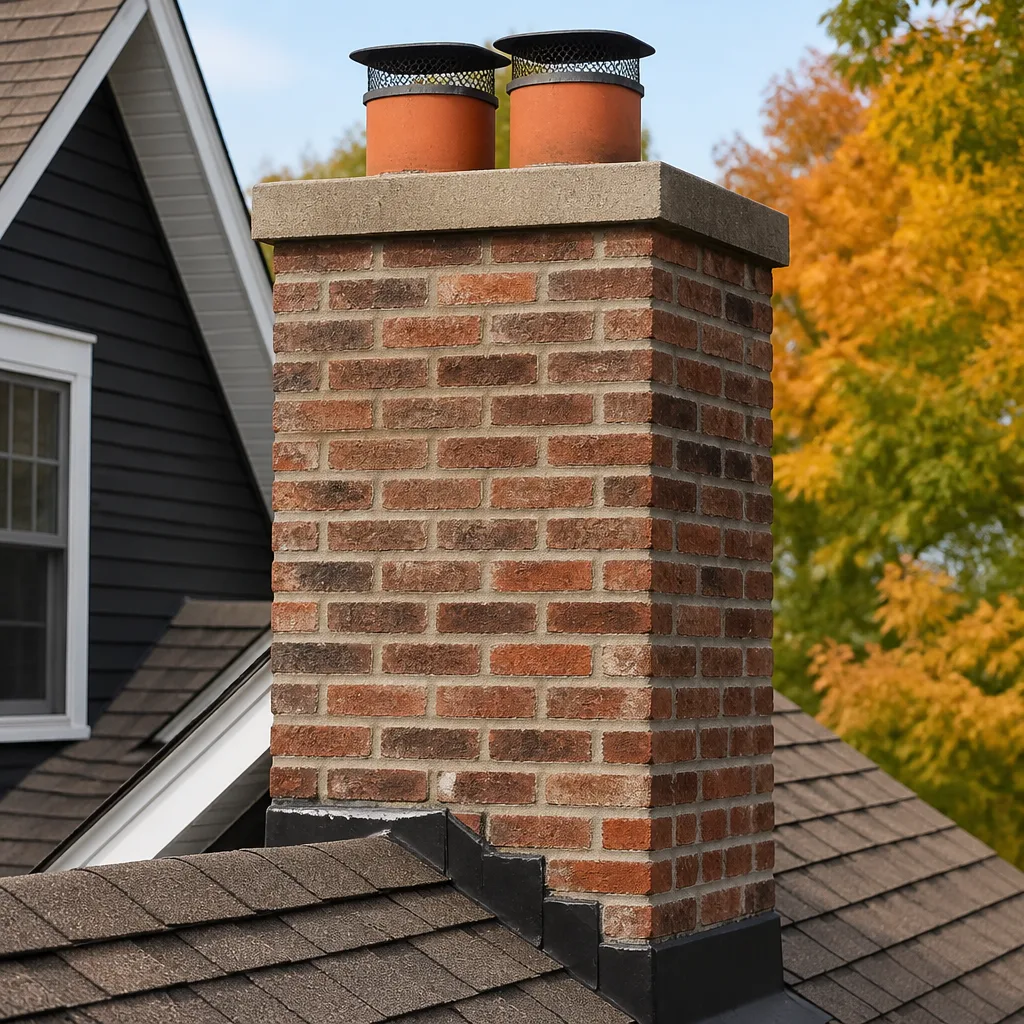 Masonry repair
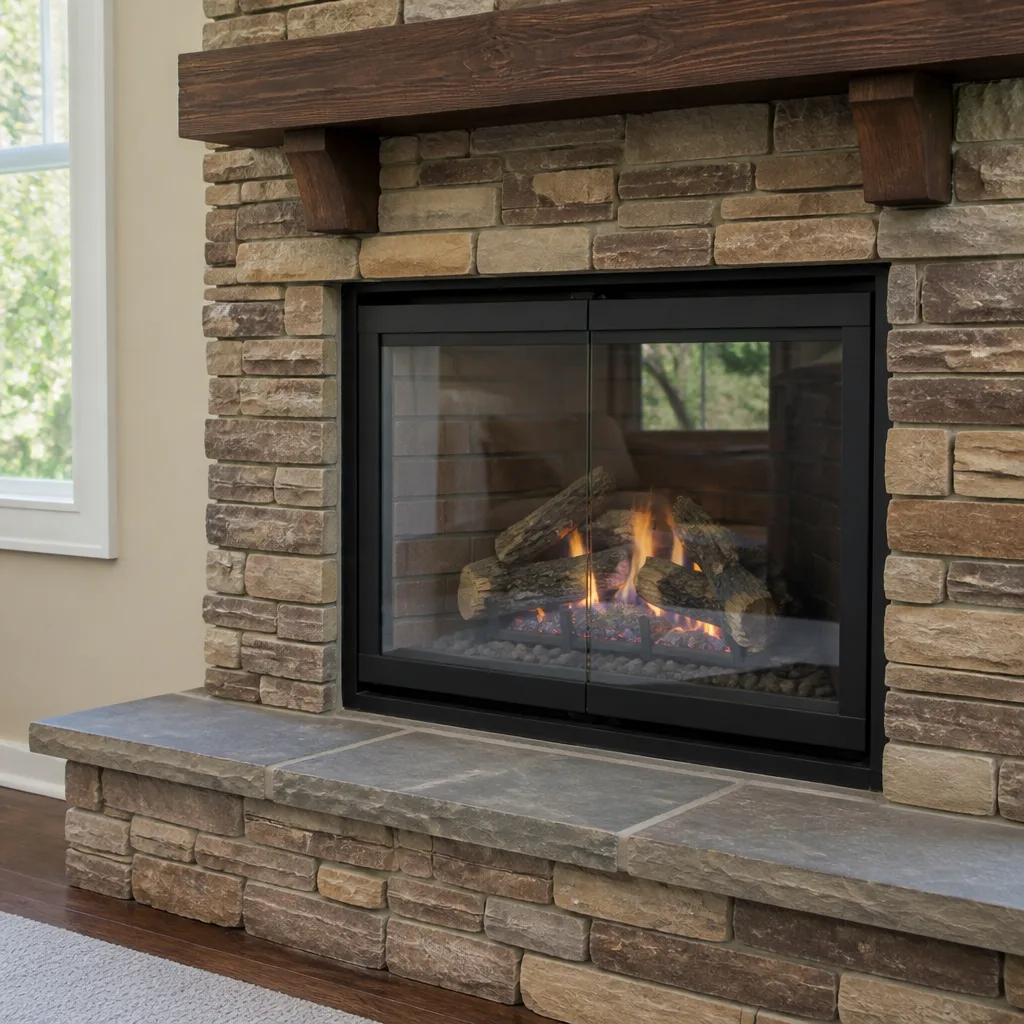 Gas fireplace service
Level 1 sweep and inspection to the NFPA 211 annual standard - flue, crown, cap, and flashing checked and photographed
Chimney sweep logs do not sweep chimneys. They loosen some creosote - which then falls where a brush and vacuum still have to collect it.
The Complete Guide to Chimney Cleaning in Ventura
Ventura averages fewer than 20 true “fireplace nights” a year, yet chimney inspectors here routinely find Stage 2 creosote buildup that would surprise homeowners in colder climates. The reason is counterintuitive: infrequent, smoldering fires in a salt-air coastal climate create creosote conditions that are, per fire, worse than regular hot burns inland. This guide explains what’s actually happening inside Ventura chimneys, what a proper cleaning covers, what it should cost in this market, and how to verify the person at your door is qualified to do the work. You’ll finish with a clear picture of whether your chimney needs attention now or can safely wait.
Quick Answer
Chimney cleaning in Ventura typically costs $189 to $349 for a standard sweep of a single-flue fireplace, and the appointment takes 45 to 90 minutes. Most Ventura homes with occasional fireplace use need a sweep every 2 to 3 years, but salt-air corrosion and infrequent smoldering fires mean some flues warrant annual attention. Any cleaning in Ventura should include a visual inspection of the flue liner, smoke chamber, damper, and chimney cap as part of the base price, with a written report of what was found.
Styles & brands we work with
Table of Contents
- Why Ventura Chimneys Get Dirty Faster Than You’d Expect
- What a Ventura Chimney Cleaning Actually Covers
- What Costs Extra: The Real Line Items
- How Ventura’s Salt Air Attacks Chimneys
- Creosote Explained in Plain English
- How Often Should You Clean a Chimney in Ventura?
- Why a Camera Inspection Changes Everything
- How to Verify a Chimney Technician in 30 Seconds
Why Ventura Chimneys Get Dirty Faster Than You’d Expect
Here’s the part most national chimney guides get wrong. They assume more fires equal more creosote. In coastal Ventura, the opposite often applies. When a fireplace is used regularly with properly seasoned wood, the firebox and flue reach sustained high temperatures that burn off much of the creosote as it forms. But when a Ventura homeowner lights a fire once every few weeks on a foggy evening, the fire spends most of its burn time smoldering at low temperature. That low-temperature combustion produces dense, sticky creosote that adheres to the flue walls.
Then the fire goes out, and the marine layer rolls in. The flue cools quickly, and the moist coastal air condenses on those creosote deposits. The result is a tar-like layer that hardens and builds up far faster per fire than a hot-burning fireplace in Bakersfield or Santa Clarita. Our technicians in Ventura regularly see chimneys with 15 or 20 fireplace uses that have Stage 2 creosote, which would normally require hundreds of hot burns inland.
Add Ventura’s specific wood-burning habits. Many homes here burn driftwood collected from the beach, or softwoods like pine and eucalyptus from local lots. Driftwood contains salt and minerals that accelerate creosote formation and can corrode metal components. Eucalyptus burns hot but produces heavy oils that coat flue liners. Neither is a good match for a low-use fireplace in a marine climate.
The practical takeaway: if you use your fireplace even occasionally in Ventura, you cannot rely on a national “every 50 fires” rule of thumb. Your chimney needs different math, and it starts with understanding what a real cleaning does.
What a Ventura Chimney Cleaning Actually Covers
A standard chimney sweep in Ventura, done correctly, is not a guy with a brush on a stick. It’s a systematic process that touches every component between the firebox and the chimney crown. When you book a sweep with a qualified company, here’s what should be included in the base price:
- Flue brushing and vacuuming. The technician brushes the full length of the flue liner with a correctly sized brush, then uses a high-powered vacuum with a HEPA filter to capture the dislodged creosote and soot. No dust should escape into your living room, and drop cloths should protect the hearth area.
- Smoke chamber brushing. The smoke chamber is the angled area above the firebox that funnels smoke into the flue. It’s the most common place for heavy creosote buildup and the spot most neglected by low-bid sweeps. A proper Ventura cleaning includes brushing this area.
- Damper check. The damper gets inspected for rust, warping, and proper operation. Salt air in Ventura accelerates damper corrosion, and a damper that won’t close fully is a major heat loss point and a potential entry for insects and birds.
- Chimney cap inspection. The cap at the top of the flue keeps out rain, birds, and debris. Ventura’s coastal winds and salt spray take a toll on caps, especially inexpensive galvanized models. The technician should verify the cap is intact, properly attached, and not obstructing draft.
- Firebox cleanout. Ash and debris get removed from the firebox. The technician should give the firebox a basic visual check for cracked firebrick or mortar joints.
- Visual liner inspection (from the top and bottom). A basic sweep includes a visual check of the flue liner, but not a detailed interior camera inspection. That’s a separate service, discussed below.
At Alcott Chimney Ventura, every sweep includes all six of these, plus a written report of anything we find. You get a written price before the work starts, and you get the results in plain English afterward. No vague “you might want to watch this” hedging.
If you want the full depth of what a cleaning checks, our Chimney Sweep in Ventura page walks through the process step by step. For the broader picture of when a visual check isn’t enough, see our Chimney Inspection in Ventura page.
What Costs Extra: The Real Line Items
Here are the actual things that get added to a chimney cleaning invoice in Ventura, and the honest prices for each. These are current Ventura market ranges, not national averages pulled from a website:
- Standard sweep, single flue, open fireplace: $189 to $279
- Standard sweep, two-story home with steep roof access: $249 to $349
- Level 2 camera inspection (add-on or standalone): $149 to $299, depending on complexity and whether liner access requires roof work
- Chimney cap replacement (galvanized): $150 to $250 installed
- Chimney cap replacement (stainless steel): $250 to $450 installed
- Damper replacement (standard cast iron): $200 to $350 installed
- Flue liner repair or resurfacing: $1,800 to $4,500, depending on flue size and condition
- Full stainless steel liner installation: $3,500 to $7,500
Those last two numbers are the ones that scare homeowners, and they’re also where dishonest contractors make their money. If a chimney company tells you a cleaning turned up a “dangerous liner crack” and you need a $4,000 repair, you should insist on one thing: a camera inspection that shows the crack on video, explained to you in real time. No camera evidence, no repair. Any legitimate Ventura chimney company will show you the footage.
Alcott’s policy is simple: if we recommend a liner repair, you see the camera footage yourself before you approve a dollar of work. And every repair comes with a written guarantee. If the repair fails within the coverage period, the second visit is free. That’s our 365-Day Done Right Promise.
How Ventura’s Salt Air Attacks Chimneys
The Pacific Ocean is a constant presence in Ventura, and it’s doing more than keeping your roses happy. Salt-laden marine air is corrosive to nearly every metal component in a chimney system, and Ventura’s prevailing onshore winds push that air across every zip code from Pierpont to the Avenue to Foothill Road.
Here’s what salt air actually does to a chimney over years:
- Metal dampers rust and seize. A cast iron damper in Ventura can fail in half the time it takes inland. You’ll notice the handle gets stiff, then won’t move at all, or you’ll see flaking rust on the firebox floor.
- Galvanized chimney caps corrode through. A standard galvanized cap in Ventura’s salt spray often fails within 5 to 7 years. Stainless steel lasts far longer and is the only cap material we recommend for coastal homes.
- Chase tops (for prefab chimneys) rust out. If you have a manufactured fireplace with a metal chimney chase, the flat metal top is a common failure point. Water gets in and ruins the interior chase walls.
- Mortar joints erode faster. The freeze-thaw cycle is minimal in Ventura, but salt crystals expand and contract inside mortar joints, weakening them over time. You’ll see spalling brick and crumbling mortar on older masonry chimneys.
- Stainless steel liner pitting. Even stainless liners eventually develop pitting from chloride exposure. This is less about the liner failing immediately and more about reduced draft and rough surfaces that catch creosote.
The practical response isn’t to panic. It’s to make sure your chimney gets inspected by someone who knows what coastal corrosion looks like in Ventura specifically. A technician from Santa Clarita or the Valley won’t have the same frame of reference. Our team works in these conditions every week, and we adjust our recommendations accordingly.
Creosote Explained in Plain English
Creosote is the tar-like residue left behind when wood smoke cools and condenses inside a chimney. It’s not ash, and it’s not soot. It’s a substance with three distinct stages, and knowing the difference matters because Stage 2 and Stage 3 creosote are how chimney fires start.
- Stage 1: A flaky, dusty coating that brushes off easily. This is what you’d expect from a fireplace used occasionally with good, dry wood. A standard sweep removes Stage 1 without difficulty.
- Stage 2: A shiny, hardened black glaze that looks like baked-on tar. This is the stage most Ventura chimneys reach because of infrequent smoldering fires. Stage 2 requires aggressive brushing and sometimes chemical treatment to fully remove. It is also combustible and will ignite under the right conditions.
- Stage 3: A thick, candle-like coating that can be a quarter-inch or more thick. This is a serious fire hazard. Removing Stage 3 creosote often requires rotary cleaning tools, chemical treatments, or in severe cases, liner replacement.
Creosote ignites at around 451 degrees Fahrenheit, and a chimney fire burns hot enough to crack flue liners, melt mortar, and spread to the structure of your home. The good news is that creosote is completely preventable with regular sweeps and proper burning habits. The bad news, as we’ve covered, is that Ventura’s climate makes casual fireplace use a bigger creosote risk than most homeowners assume.
The exact point at which creosote becomes dangerous depends on both the stage and the thickness of the deposits. That’s why a professional evaluation matters more than a visual peek up the flue with a flashlight. A proper sweep removes what’s there today. A proper inspection tells you how fast it will come back and what to watch for in between.
How Often Should You Clean a Chimney in Ventura?
The standard national advice from the Chimney Safety Institute of America is a sweep when creosote reaches 1/8 inch thickness, or annually if you use your fireplace regularly. But for Ventura, we give more specific guidance:
If you use your fireplace more than once a week during cool months: schedule a sweep every 12 to 18 months. The consistent use actually helps your case because fires burn hotter, but regular use still accumulates creosote over time.
If you use your fireplace occasionally, maybe 5 to 15 fires per year: this is the Ventura homeowner we worry about most. Schedule a sweep every 2 years, and if you’ve been burning driftwood or eucalyptus, consider an annual check. These low-frequency smoldering fires are the ones producing the Stage 2 buildup.
If you almost never use the fireplace: schedule an inspection every 2 to 3 years anyway. The concern here isn’t creosote; it’s moisture intrusion. A chimney that sits unused in Ventura’s coastal air is still absorbing salt and humidity, and rain still falls on the cap. Birds, rats, and raccoons also love unused chimneys. An inspection catches these problems before they become expensive.
If you burn a lot of driftwood or softwoods: schedule a sweep every 12 months regardless of frequency of use. The minerals and oils in these woods create accelerated creosote and corrosion.
The simplest way to know whether your Ventura chimney needs attention is to have it looked at by someone who will give you an honest answer. That’s what our Chimney Sweep in Ventura appointments provide. We’ll tell you if you have two years left or two months, and we’ll show you the evidence.
Why a Camera Inspection Changes Everything
A standard visual sweep only tells you what’s visible from the top and bottom of the flue. The interior walls of the liner, the mortar joints between flue tiles, the smoke chamber, and the connection at the throat of the chimney are invisible to the naked eye from either end. And those are exactly the places where dangerous conditions hide.
A Level 2 camera inspection lowers a high-resolution camera down the full length of the flue, recording everything. The technician can see:
- Hairline cracks in clay flue tiles that would be invisible from above or below
- Gaps in mortar joints where heat and carbon monoxide can escape into wall cavities
- Hidden creosote buildup in the smoke chamber that a brush can’t reach
- Signs of water damage, including rust stains and efflorescence
- Improper liner installation or a missing liner altogether
- Damage from previous chimney fires that was never disclosed
A camera inspection is the only way to verify the condition of a chimney before you buy a home, after a chimney fire, or after any event that might have damaged the flue. In Ventura’s real estate market, a Level 2 inspection before closing is the single best $200 to $300 you can spend on a home. We find problems in roughly a third of the chimneys we inspect during escrow.
At Alcott, camera inspections are how we back up every liner recommendation. If we tell you a liner needs replacement, you see the footage. We don’t ask you to take our word for it. That’s the whole point of the Chimney Inspection in Ventura service we offer: evidence-based recommendations, not pressure tactics.
How to Verify a Chimney Technician in 30 Seconds
Here’s the uncomfortable truth: the chimney industry in California has low barriers to entry. A handyman with a ladder and a brush can call himself a chimney sweep, and he’s going to charge less than a legitimate company. What you lose for that savings is an actual safety inspection, proper insurance coverage, and accountability when something goes wrong.
The Chimney Safety Institute of America (CSIA) certification is the recognized credential for chimney professionals. A CSIA-certified technician has passed a written exam covering chimney construction, fire codes, combustible clearances, draft, and safety practices, and must recertify every three years. That certification requires real knowledge, not just showing up.
Here’s how to verify a technician in 30 seconds, before you let anyone into your home:
- Ask for the CSIA certification number. Any legitimate technician will have it memorized or on their paperwork.
- Check the number at csia.org. The certification database is public and searchable. It takes under a minute.
- Ask for proof of liability insurance and workers’ compensation. If they don’t have it, they don’t come on your property. End of conversation.
- Expect a written price before they start. A verbal “we’ll see what it needs” is a red flag.
At Alcott, we go further than certification. Every technician passes a background check and identity verification before ever stepping on a customer’s property. This is the Threshold Standard, and it’s non-negotiable. You know the technician’s name and see their photo before we arrive, and they’re required to show a photo ID badge at the door. Every time, no exceptions. In a city where opening the door to a stranger is a legitimate concern, we’ve built our entire process around putting you at ease before the truck pulls up.
Ruben Castellano has led this company since 2002, and the Threshold Standard applies to every appointment we book. For any chimney concern, you can reach us through the Alcott Chimney Ventura home page or read more about our cleaning service in detail.
Common Mistakes to Avoid
- Burning driftwood from the beach. It’s tempting and free, but driftwood contains salt that accelerates corrosion and creosote formation. If you’ve burned driftwood in the past, get a sweep sooner rather than later.
- Skipping the chimney cap. A missing or damaged cap in Ventura means rain, salt spray, and birds all have direct access to your flue. A stainless steel cap costs a fraction of what a water-damaged liner repair costs.
- Waiting for smoke backup before calling. By the time smoke is backing up into the living room, the flue is severely restricted or the damper has failed. This is late-stage intervention, and it’s always more expensive than a routine sweep.
- Using a handyman sweep without camera capability. If they can’t show you the inside of the flue, they can’t tell you if it’s safe. A cheap sweep that misses a liner crack is the most expensive service you’ll ever buy.
- Assuming an unused chimney is a safe chimney. Unused chimneys in coastal climates develop moisture problems, animal nests, and hidden corrosion. They need inspections too.
- Taking a verbal price. In California, you have a right to a written estimate. Any contractor who won’t provide one before starting work is not someone you want on your roof.
- Ignoring a small chimney fire because “it went out on its own.” Every chimney fire damages the flue liner, even the ones that self-extinguish. After any chimney fire, a Level 2 camera inspection is non-negotiable before you use the fireplace again.
See the difference
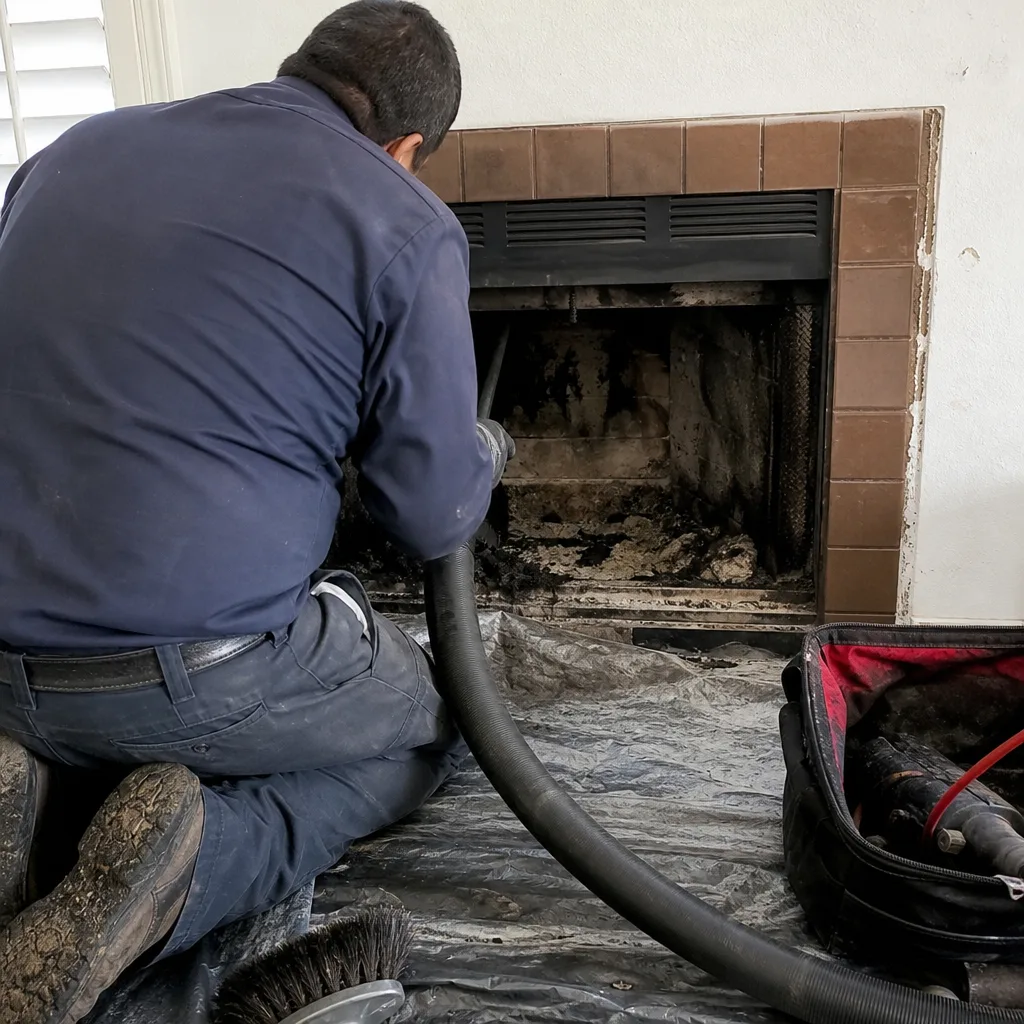 Before
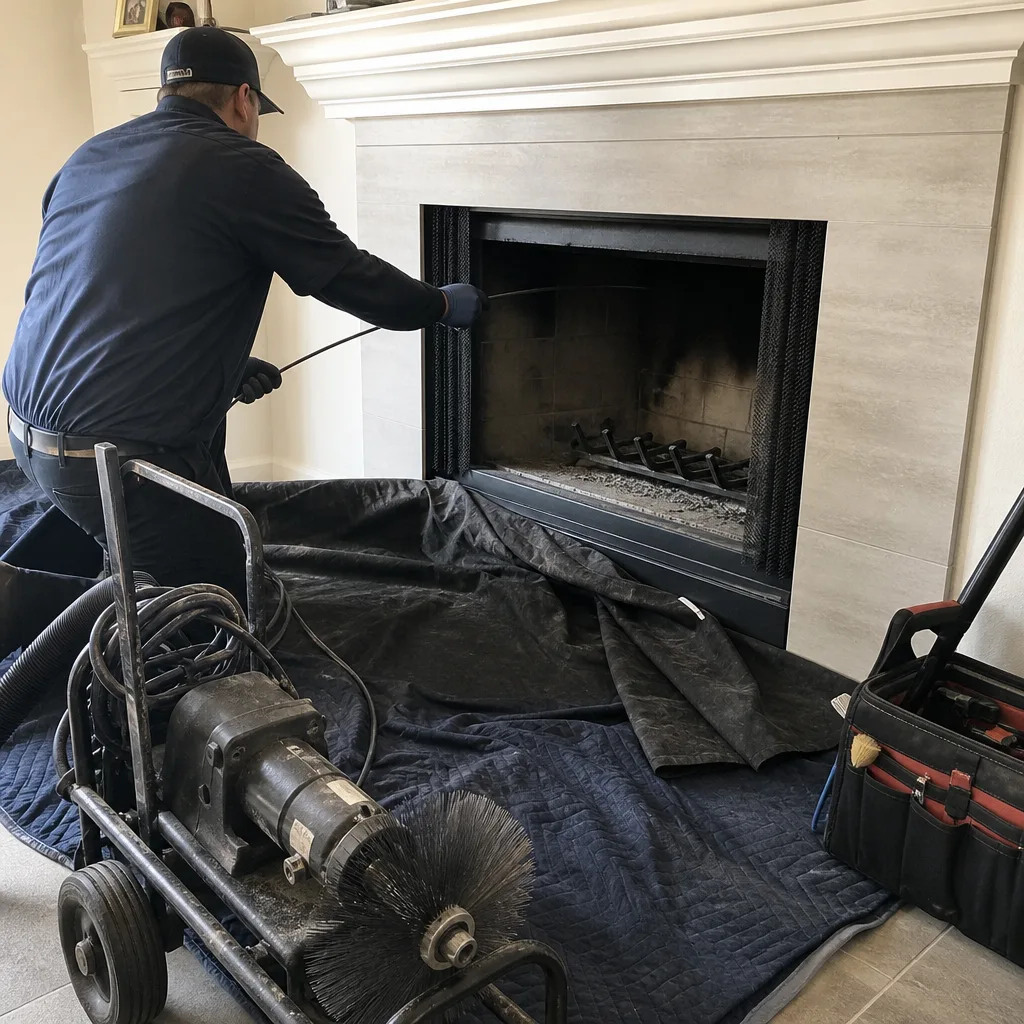 After
After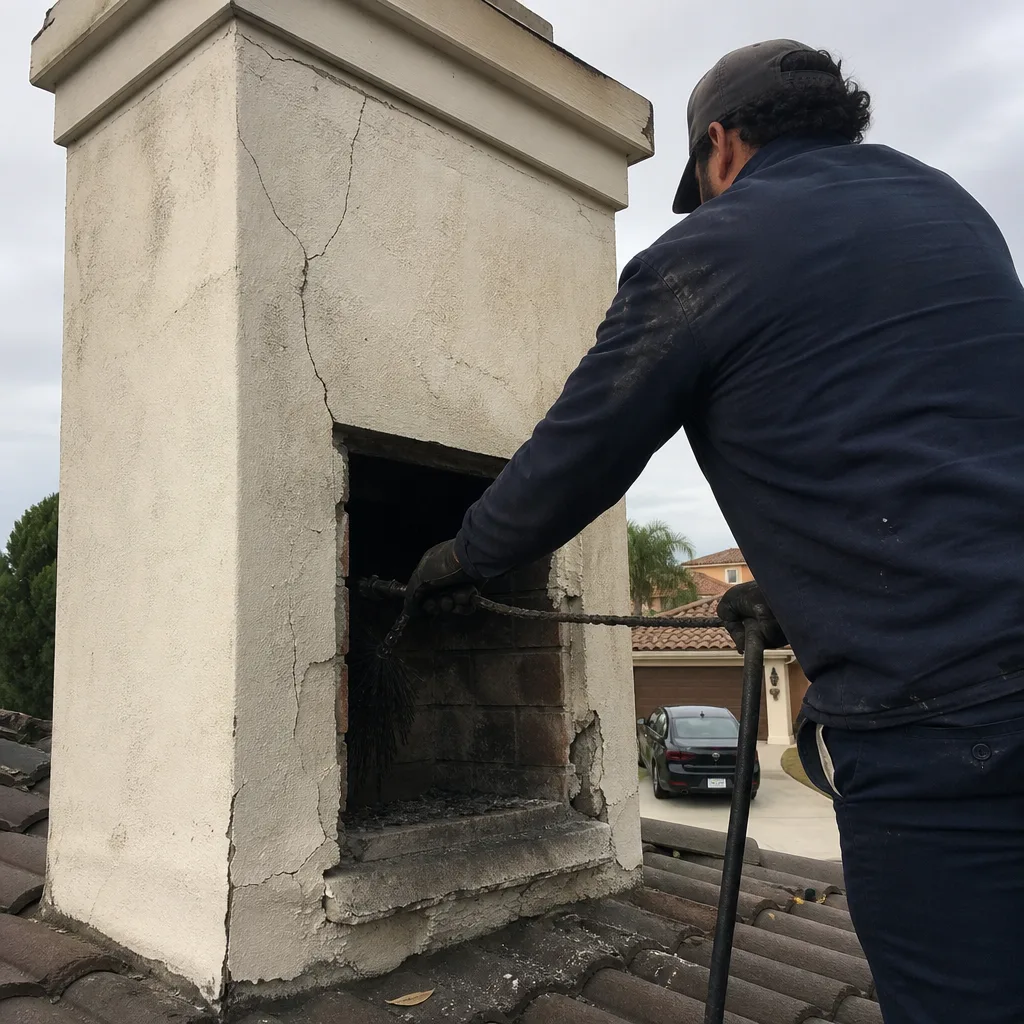 Before
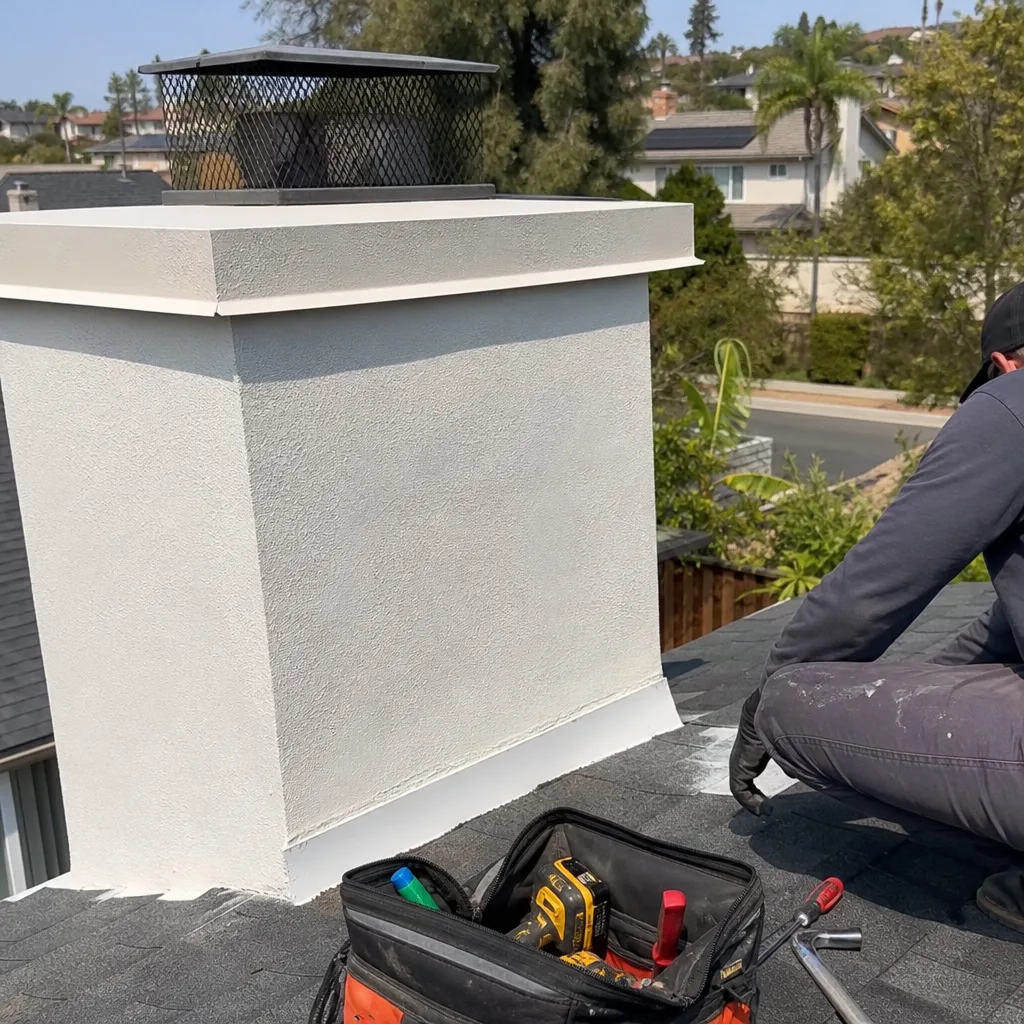 After
After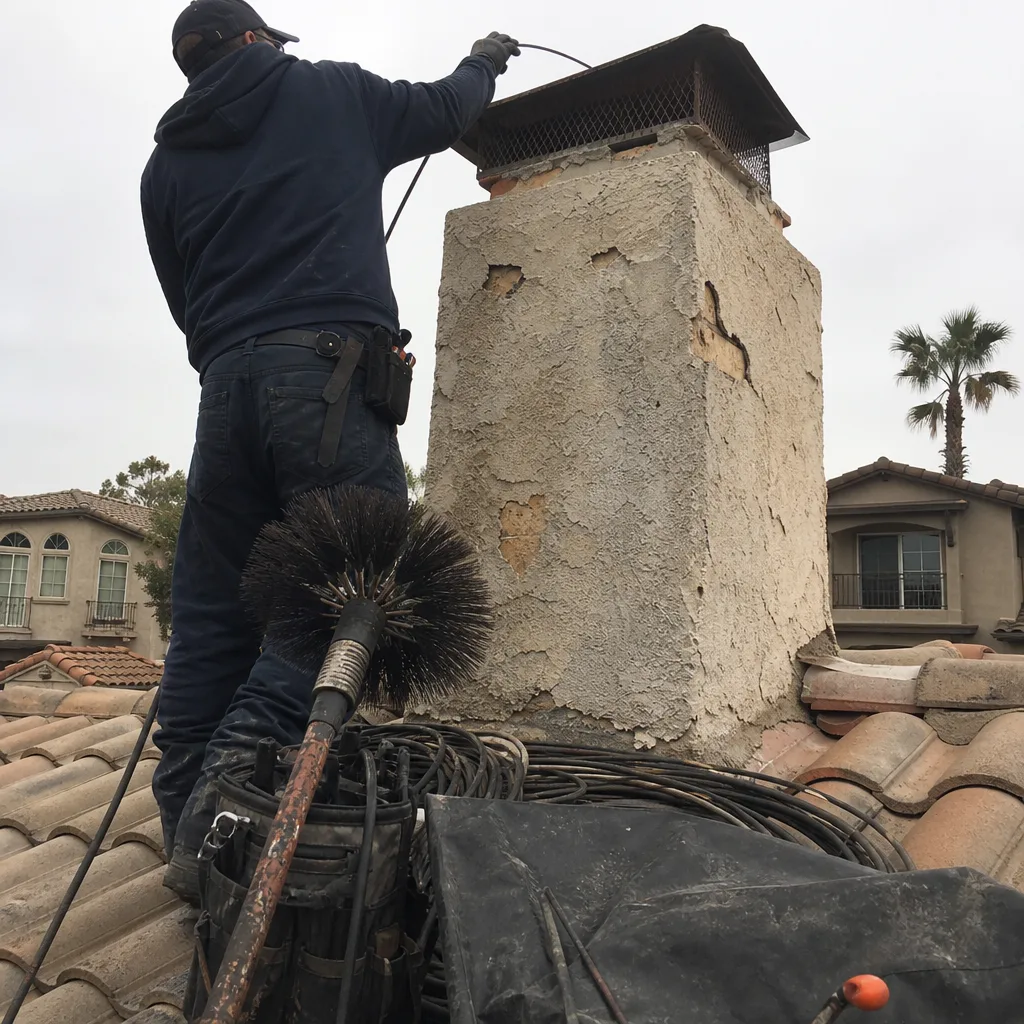 Before
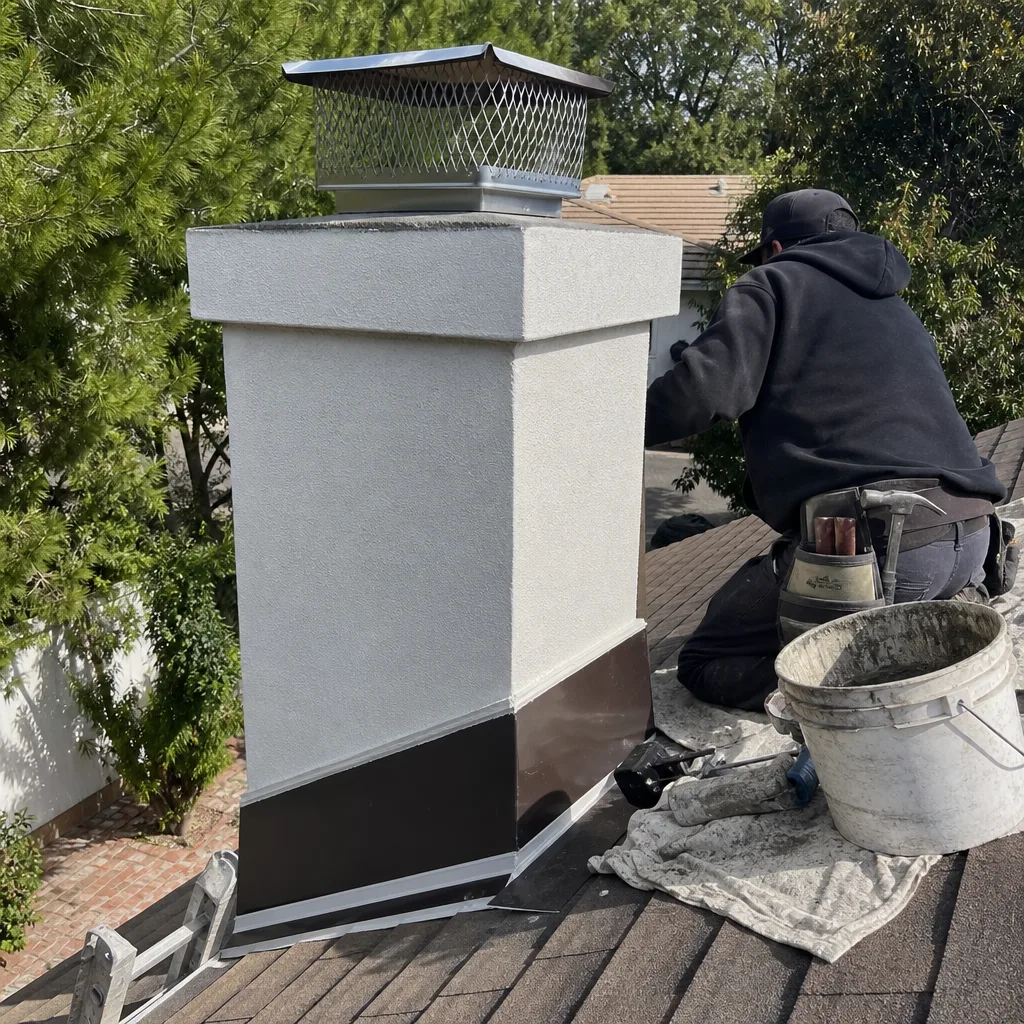 After
AfterWhen to Call a Professional
Call a chimney professional if you see black, flaky buildup on your flue or firebox walls, if you smell a smoky or campfire-like odor in the home when the fireplace hasn’t been used for days, if your damper won’t fully open or close, or if you hear or see animals in the chimney. Call immediately if you’ve had a chimney fire, even a small one, or if you smell gas from a gas fireplace. Alcott Chimney Ventura offers free estimates in Ventura, and our phones are answered by a live person around the clock. Call (559) 282-2695 for an honest assessment, no pressure applied.
Frequently Asked Questions
A standard chimney sweep in Ventura typically costs $189 to $349, depending on the size of the flue, roof access, and the amount of creosote buildup. This usually includes flue brushing, vacuuming, a visual inspection, and a basic report. Additional services like camera inspections or cap replacement cost extra. Call (559) 282-2695 for an exact quote, estimates are free.
You need a new liner only if the current one is cracked, deteriorated, or improperly sized, and the only way to verify that is with a camera inspection. Any company recommending a liner replacement should show you the footage and explain the specific defect. If they can’t or won’t, get a second opinion. We show camera footage to every customer before recommending any liner work.
In Ventura, most homeowners should sweep their chimney every 1 to 3 years depending on usage: annual for weekly use or driftwood burning, every 2 years for occasional use, and every 2 to 3 years for rarely used fireplaces. The coastal climate changes the math compared to inland areas. A quick inspection is the best way to know your specific timeline.
Skipping cleaning allows creosote to build up until it becomes a fire hazard, and in Ventura’s salt air, it also allows corrosion to progress unchecked. The likely outcomes are a chimney fire, carbon monoxide backup, or an expensive repair that could have been prevented with a $250 sweep. None of those are worth saving $200.
Every Alcott technician is background-checked and identity-verified through the Threshold Standard, and our team is certified for the work we perform. You see the technician’s name and photo before arrival, and they show a photo ID badge at the door. Ruben Castellano has led the company since 2002 with these standards in place.
Gas fireplaces need a different kind of service than wood-burning chimneys, but they still need periodic inspection and cleaning of the venting system. Gas flues accumulate dust, debris, and sometimes corrosion, and a blocked gas vent is a carbon monoxide risk. For gas fireplace service specifics, see our Gas Fireplace Repair in Ventura page.
The Bottom Line
Ventura’s mild climate doesn’t exempt your chimney from needing attention. If anything, the combination of infrequent smoldering fires and constant salt air creates conditions that demand more vigilance than a cold-climate chimney that gets hot, regular use. A proper sweep in Ventura costs between $189 and $349 and takes less than two hours. The decision matrix is simple: if you have any creosote buildup, get it cleaned. If you can’t remember the last sweep, schedule one. If you’re buying a home, get a camera inspection. The cost of prevention is a fraction of the cost of repair, and the evidence-based approach is the only one worth paying for.
Written by Ruben Castellano, Owner at Alcott Chimney Ventura, serving Ventura since 2002.